
CNC Turning
CNC Turning Overview
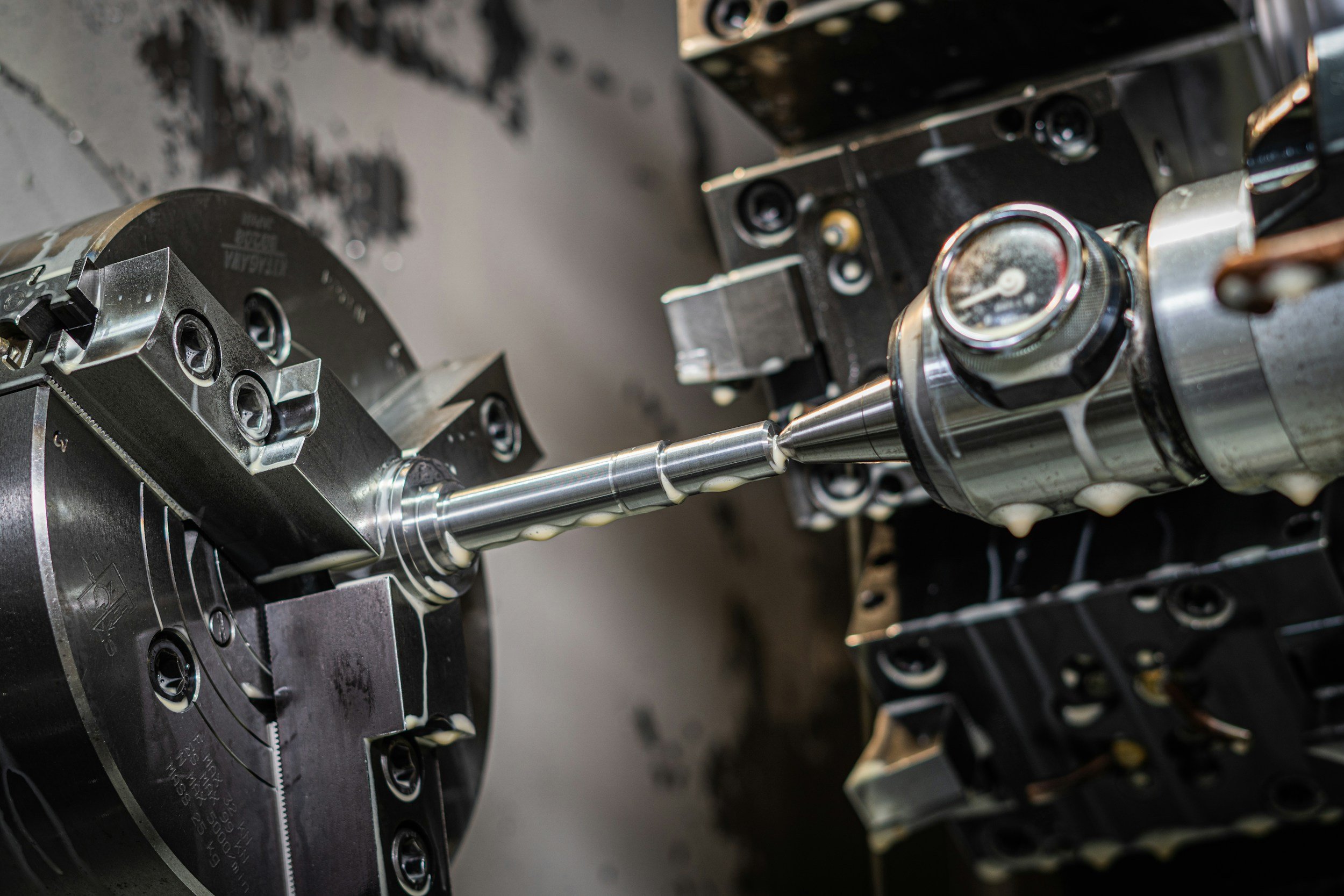
CNC turning is a precision machining process in which raw bar or billet material rotates while stationary cutting tools shape the exterior and interior profiles of a component. The process is optimized for producing cylindrical parts with defined diameter relationships, controlled lengths, and precise geometric features.
Advantages of CNC Turning
CNC turning enables efficient production of rotational components with controlled process stability and strong dimensional repeatability. The continuous rotational cutting motion promotes uniform material removal, stable diameter control, and consistent surface finish quality. By minimizing part repositioning and handling, CNC turning reduces variability between operations and supports scalable production from prototype through full production volumes.
Why DT Precision for CNC Turned Components?
DT Precision’s turning operations are supported by CNC Swiss lathes capable of producing components from straightforward cylindrical parts to complex, multi-feature geometries requiring tight dimensional control. These platforms provide stable diameter accuracy, controlled concentricity, and repeatable performance across both prototype and production volumes.
Our CNC turning capabilities include:
Typical Diameter Tolerance Capability — Maintaining tolerances as tight as ±0.0005”
Surface Finish Capability — 16–32 µin Ra on turned surfaces (application dependent)
Machining Features — Precision diameters, threads, grooves, tapers, cross-drilled features, and milled secondary operations
Material Versatility — Aluminum, stainless steel, alloy steels, titanium, brass, and specialty materials
Common Turned Components
Shafts and Spindles
Pins and Dowels
Valve and Fluid Control Components
Threaded Fittings and Adapters
Bushings and Sleeves
Request a Quote for CNC Turned Components
Upload your prints for precision review and production planning